
Jhajjar: Nihon Kohden has announced the India launch of its advanced Life Scope E7 (BSM-5700 series), marking a significant addition to the country’s patient monitoring ecosystem.
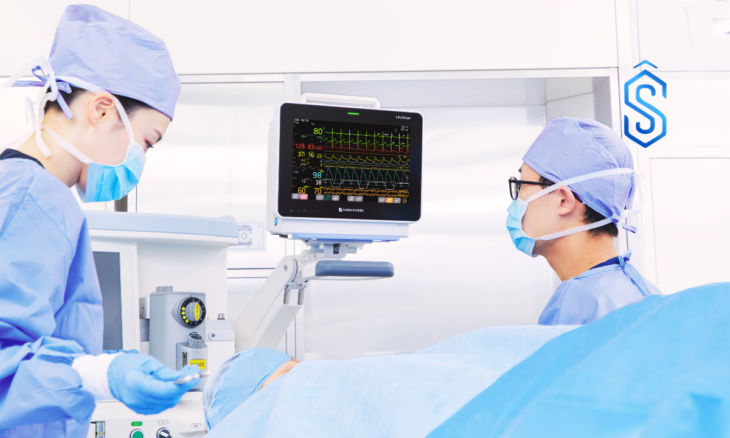
Nihon Kohden India Private Limited, a wholly owned subsidiary of Nihon Kohden Corporation, introduced the integrated multi-parameter monitoring system designed for use across intensive care, emergency, operating rooms, and general wards.
The launch of Nihon Kohden Life Scope E7 reflects the company’s continued focus on expanding technologically advanced healthcare solutions in India.
The system is engineered to deliver comprehensive patient monitoring capabilities while integrating seamlessly into hospital digital infrastructure.
Regulatory Approval and India Launch Timeline
The Nihon Kohden BSM-5700 series received Import License clearance from the Central Drugs Standard Control Organisation in February 2026, marking its formal regulatory approval for the Indian market. The official launch of Nihon Kohden Life Scope E7 in India is scheduled for April 16, 2026.
The monitoring system is available in two configurations—a 15.6-inch and a 12.1-inch high-resolution LCD touchscreen—allowing hospitals to deploy the most suitable variant depending on clinical requirements.
Also Read: Cross-Border Remote Robotic Surgery Performed by Kokilaben Dhirubhai Ambani Hospital
Advanced Data Storage and Global Deployment
The Nihon Kohden Life Scope E7 system is designed to store up to 120 hours of continuous patient trend data. It supports full waveform disclosure for up to five parameters simultaneously and maintains up to 40,960 alarm history records.
These capabilities enable clinicians to conduct detailed retrospective analysis, enhancing patient monitoring and audit processes.
Prior to its India entry, Nihon Kohden Life Scope E7 has already been deployed across hospitals in Europe, North America, South America, the Middle East, Southeast Asia, and Africa. Its introduction in India marks its first entry into the South Asian market.
Nihon Kohden Life Scope E7: Designed to Operate Across Five Critical Clinical Environments:
- Intensive Care Unit (ICU)
- Neonatal ICU (NICU)
- Emergency Room (ER)
- Operating Room (OR)
- General Ward
The system integrates monitoring for ECG, SpO₂, blood pressure (invasive and non-invasive), body temperature, CO₂ levels, anaesthetic gases, and brain activity including EEG and amplitude-integrated EEG (aEEG). This eliminates the need for multiple standalone devices, streamlining clinical workflows.
Proprietary Technologies Enhancing Accuracy
The Nihon Kohden platform incorporates several proprietary technologies:
- cap-ONE: Ultra-compact mainstream CO₂ sensor suitable for intubated and non-intubated patients
- iNIBP: Measures non-invasive blood pressure during cuff inflation for faster readings
- PWTT (Pulse Wave Transit Time): Automatically triggers blood pressure measurement upon detecting sudden pressure changes
- SynECi18: Generates right ventricular and posterior wall data from a standard 12-lead ECG without additional electrodes
These technologies are developed in-house by Nihon Kohden, ensuring accuracy and reliability across clinical applications.
Integration, Cybersecurity, and Digital Health Readiness
A key feature of the Nihon Kohden Life Scope E7 is its Human Machine Interface (HMI) design, which emphasizes usability and accuracy in high-pressure clinical environments. The system supports integration with third-party anaesthesia machines and ventilators.
It also connects to hospital Electronic Medical Record (EMR) systems using the HL7 data exchange protocol. For cybersecurity, the system uses certificate-based Net-9 encryption to secure all network communications.
The Nihon Kohden platform aligns with India’s digital health transformation goals, particularly the Ayushman Bharat Digital Mission. Its structured data output capabilities enable hospitals to contribute to a unified digital health records ecosystem.
Yuya Kawabata, Managing Director, Nihon Kohden India Private Limited, said: “The Life Scope E7 has been developed with a clear design intent — compact form, ease of use, and uncompromising reliability for clinicians working under pressure.
As India’s healthcare system continues to scale and modernise, the need for monitoring platforms that are technically precise, adaptable across departments, and capable of supporting digital health infrastructure is only growing. We are proud to bring this globally proven platform to Indian hospitals and to contribute to better patient outcomes in critical care.”